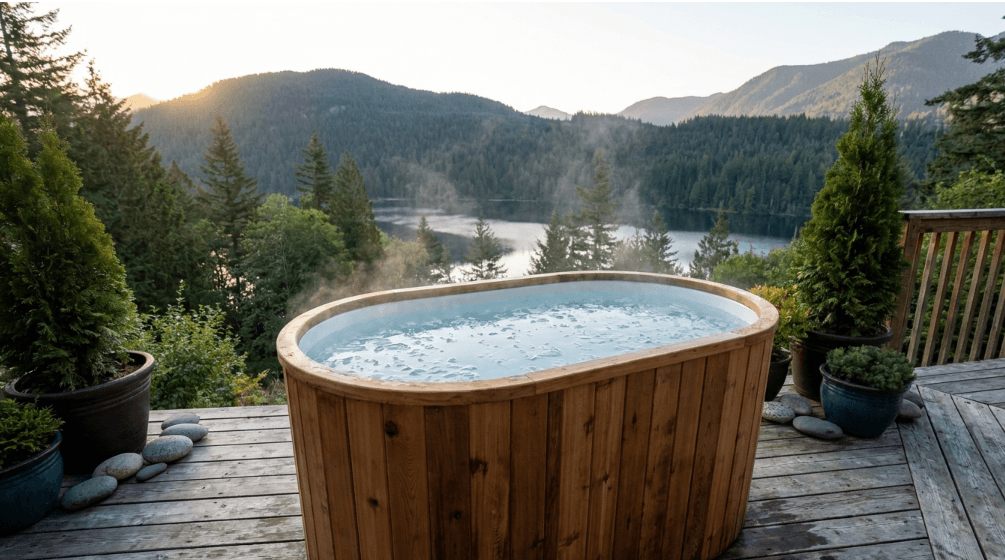
A cold plunge that gets routine care, weekly filter checks, a consistent sanitizer schedule, a cover between sessions, and proper seasonal winterizing, typically lasts 8 to 15 years before major components need replacing. Skipping any one of these, especially winterizing before a hard freeze or letting the filter run past its service life, is what shortens that lifespan down to a few years instead. The maintenance itself is not complicated; it just needs to happen on a schedule rather than only when something already looks wrong.
What Does a Weekly Routine Actually Look Like?
Picture a household that uses their tub four or five mornings a week. The weekly habit is simple: check the filter for buildup and rinse it if flow feels slower than usual, check sanitizer levels with test strips if running a chlorine or bromine system, and wipe down the waterline and any exposed trim after draining. None of this takes more than ten minutes, and doing it weekly is what prevents the buildup that eventually turns into a bigger cleaning job. Skipping a week here and there is not catastrophic, but skipping it for a month tends to show up as cloudy water or a musty smell that takes real effort to fix.
What Changes With the Seasons?
Spring and fall are when most owners do a full inspection: checking hoses and fittings for wear after a season of use, confirming the chiller’s intake and vents are clear of debris, and doing a full drain and refill if it has not happened recently. Summer heat pushes the chiller harder, so this is the season to watch for algae growth if the tub sits in direct sun and to consider shade or a more frequent filter rinse schedule. Winter is the highest-risk season for tubs in freeze-prone climates: water left in lines or a pump housing can freeze, crack fittings, and cause damage that only shows up as a leak the following spring. Following the manufacturer’s specific winterizing steps, which usually means draining lines fully and either storing or protecting the chiller per its cold-weather rating, is the single most important seasonal task for long-term durability.
What Does Annual Servicing Actually Involve?
Once a year, beyond the routine weekly and seasonal habits, it is worth a closer inspection of the mechanical components: refrigerant lines and compressor function on the chiller, pump seals for early signs of wear, and any gaskets or fittings that see repeated wet-dry cycling. Some owners handle this themselves with a manufacturer’s checklist; others bring in a technician, similar to servicing an HVAC system, particularly once a tub is several years old. This is also a reasonable time to compare what a full replacement or upgrade would cost against continued repairs; checking current models and support options, like those the team at SweatDecks lists for its cold plunge lineup, gives a useful reference point for what a comparable new unit runs if an aging chiller is starting to need frequent attention.
What Habits Actually Extend the Chiller’s Working Life?
Beyond scheduled maintenance, a few daily habits matter more than owners expect. Using a fitted cover between sessions cuts down on debris, evaporation, and the workload on the chiller, since an open tub loses cold to ambient air constantly. Avoiding letting sunscreen, lotion, or heavy sweat residue build up untreated in the water reduces strain on the filter and sanitizer system. Keeping the area around the chiller’s intake clear of leaves, mulch, or stored items helps it breathe properly, which is a common and easily avoided cause of a chiller running hotter and wearing out faster than it should.
Is the Long-Term Investment Worth It?
Consistent maintenance is really what determines whether the investment pays off, because the benefit associated with cold water immersion depends on regular use rather than occasional dips. A 2025 systematic review and meta-analysis in PLoS One and a 2023 meta-analysis in Frontiers in Physiology both found modest associations between cold-water immersion and improved recovery or wellbeing outcomes, generally reflecting participants using it consistently over time rather than sporadically. A 2012 Cochrane review found similar reductions in muscle soreness with regular cold-water immersion after exercise, while rating the underlying evidence as low to moderate certainty. A tub that breaks down after two years from neglected winterizing, or one that becomes unpleasant to use because filtration was ignored, delivers none of that. The upfront cost of a quality unit matters less over a decade than whether the household actually keeps up with the handful of routine tasks that keep it running.
What Does a Realistic First-Year Timeline Look Like?
Month one is usually the easiest, since everything is new and the routine feels novel enough that filter checks and sanitizer testing happen without much thought. By month three or four, this is where habits tend to slip, particularly the weekly filter check, once the tub becomes a normal part of the routine rather than a new purchase getting extra attention. Setting a recurring reminder, even a simple weekly calendar note, through this stretch helps carry the habit past the point where novelty alone was doing the work. The first seasonal transition, usually the first fall or first hard freeze depending on when the tub went in, is the first real test of whether winterizing steps get followed correctly, and it is worth reading the manufacturer’s cold-weather instructions again rather than relying on memory the first time through. By the one-year mark, a household that has kept up with the weekly and seasonal basics typically has a tub running exactly as well as it did on day one.
What Records Are Worth Keeping?
A simple log, even a basic notebook or phone note, of filter replacement dates, sanitizer type and dosing, and any service calls pays off later in two ways. It makes troubleshooting faster if water quality suddenly changes, since knowing exactly when the filter was last changed narrows down likely causes quickly. It also matters if the tub is ever sold or if a warranty claim comes up, since a documented maintenance history is often requested as part of a warranty repair and demonstrates the unit was cared for as intended. This takes minutes a week to maintain and is one of the more overlooked habits among owners who otherwise do everything else right.
Frequently Asked Questions
How often does a cold plunge chiller need servicing? Most manufacturers recommend a professional or DIY inspection once a year, checking refrigerant lines, compressor, and pump seals.
Should I cover a cold plunge when it’s not in use? Yes. A fitted cover reduces evaporation and debris and cuts down on how hard the chiller works to hold temperature.
What’s the biggest threat to a cold plunge over a full year? Freeze damage in winter and UV or algae buildup in summer. Proper winterizing and summer filtration upkeep address most of what shortens a tub’s life.
How long should a well-maintained cold plunge last? Commonly 8 to 15 years with routine filter changes, sanitizer checks, and annual servicing. Neglected maintenance can cut that significantly.
References
- Effects of cold-water immersion on health and wellbeing: A systematic review and meta-analysis, PLoS One, 2025
- Effects of cold water immersion after exercise on fatigue recovery and exercise performance: meta analysis, Frontiers in Physiology, 2023
- Cold-water immersion (cryotherapy) for preventing and treating muscle soreness after exercise, Cochrane Database of Systematic Reviews, 2012